Built Slow, Built Right: How Finnish Founders Are Quietly Rewriting the Rules of American Business
Somewhere between the pitch deck and the pivot, American startup culture lost the plot. The gospel of "fail fast, break things" has produced a generation of founders who are very good at raising money and very bad at building anything that lasts. Burn rates are celebrated. Longevity is boring. And somewhere along the way, the idea that a business could simply be good at what it does — for decades, not just until the next funding round — became almost quaint.
A handful of Finnish and Finnish-American founders are pushing back. Not loudly. Not with a manifesto. Just by doing it differently and watching their businesses outlast the noise.
What Sisu Actually Means in a Business Context
Most Americans encounter the word sisu as a rough translation of "grit" or "resilience," and that's not wrong — but it's incomplete. Sisu is less about bouncing back from failure and more about the quiet determination to keep going when the work is hard and the reward is uncertain. It's not flashy. It doesn't photograph well for Instagram.
In a business context, sisu looks like this: you don't cut corners on materials because it would save you 15 percent this quarter. You don't hire fast and fire faster because labor is just a line item. You don't pivot your entire brand identity because a consultant told you a different market segment is trending. You make decisions for the long game, absorb short-term pain with a certain calm stubbornness, and trust that quality compounds.
It's an approach that's deeply unfashionable in American startup circles — and increasingly attractive to founders who've watched the fashionable approach crash and burn.
Matti's Story: Choosing Craft Over Capital
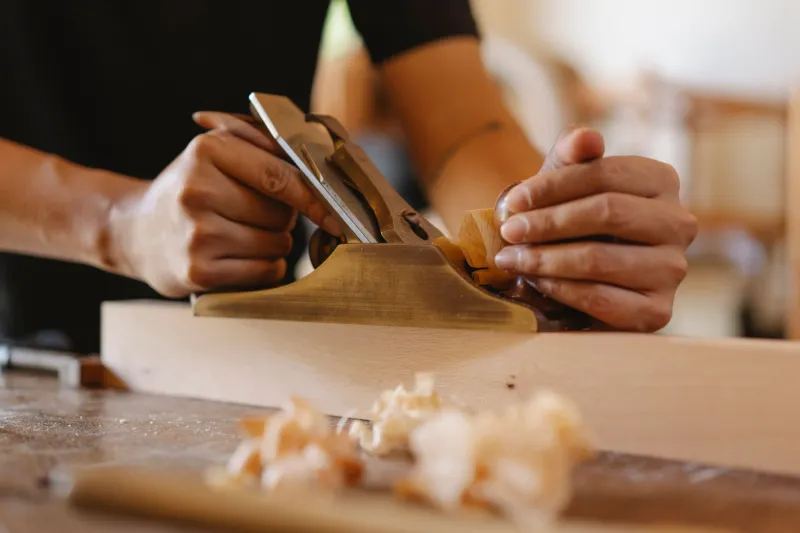
Matti Virtanen — who asked that his company name not be used, because he genuinely doesn't want the attention — moved from Tampere to Portland, Oregon, twelve years ago. He started a small woodworking operation making custom kitchen furniture. He had three job offers from tech companies within his first year in the States. He turned all of them down.
"Everyone thought I was crazy," he says, laughing over the phone. "But I knew what I wanted to build. I didn't want to grow fast. I wanted to grow right."
Today, his shop has a six-month waitlist. He employs four full-time craftspeople, all of whom he's trained personally. He's never taken outside investment. He's never had a viral moment. He's also never had to lay anyone off.
"In Finland, you don't brag about how fast you grew. You talk about how long you've been doing it," he says. "That's the real measure."
The Employee-as-Craftsperson Model
One of the most striking differences between Finnish business culture and the American startup playbook is how employees are treated — or more precisely, how their work is valued.
Finnish companies, particularly in the trades and manufacturing sectors, have long operated on the premise that skilled workers are assets to be developed, not resources to be deployed and discarded. Apprenticeship culture runs deep. Long tenures are the norm. Turnover is viewed not as an inevitable cost of doing business but as a failure of leadership.
Annika Mäkinen, who co-founded a small-batch ceramics studio in Asheville, North Carolina, after years in the Finnish design industry, brought this philosophy directly into her American business.
"When I hire someone, I'm making a commitment," she explains. "I'm saying: I'm going to invest time in teaching you, and I expect you to invest time in getting good. That's a relationship, not a transaction."
Her studio employs six people. The average tenure is over five years — an eternity by American small business standards. She attributes this partly to competitive wages and partly to something harder to quantify: the sense that the work itself matters.
"People want to feel like craftspeople, not just workers," she says. "When you treat them that way, they show up differently."
Quality Over Hype: A Radical Act
There's a particular kind of exhaustion setting into American entrepreneurship right now. Founders who chased growth at all costs and found themselves with bloated teams, unsustainable burn rates, and products they're not proud of are quietly recalibrating. Some are calling it a "back to basics" moment. Finnish founders would just call it common sense.
Juha Korhonen runs a small-scale food production company outside Minneapolis, making traditional Finnish rye products for the American market. He's been approached twice by regional grocery chains offering distribution deals that would require him to scale up production significantly and compromise his sourcing standards.
Both times, he said no.
"The moment I start using cheaper grain to hit a price point, the product is different. It's not my product anymore," he says. "I'd rather sell less of something I believe in than a lot of something I don't."
His company is profitable. Modestly, sustainably profitable. He's not on any "30 Under 30" list. He doesn't have a podcast. His product has a devoted following that's grown almost entirely through word of mouth, and he sleeps fine at night.
What American Founders Are Starting to Hear
The appeal of the Finnish model is filtering into broader American business conversations, particularly among founders who've been through the VC-backed growth treadmill and found it wanting. There's a growing interest in what some are calling "calm companies" — businesses built for sustainability rather than scale, optimized for longevity rather than exit.
This isn't anti-ambition. It's a redefinition of what ambition looks like. Building something that's still standing and still excellent in twenty years is genuinely hard. It requires the kind of patient, grinding commitment that sisu describes — the willingness to do the unglamorous work, consistently, without the validation of a funding announcement or a press hit.
"Americans are starting to realize that 'fail fast' is a philosophy for people who don't really care what they're building," says Annika. "If you care — if the thing you're making actually matters to you — you don't want to fail fast. You want to get it right."
Building Something Worth Keeping
The founders profiled here aren't household names. They're not disrupting industries or attracting think pieces. They're making furniture, ceramics, and rye bread — and they're doing it with a level of care and intentionality that's becoming genuinely rare.
What they share, beyond their Finnish roots, is a particular relationship with time. They think in decades. They measure success in quality and reputation rather than headcount and revenue multiples. They've absorbed, consciously or not, a cultural understanding that the best things take a long time to build — and that the building itself is the point.
In an economy that rewards the quick flip and the fast exit, that's not just a business strategy. It's a quiet act of resistance.
And if the waitlists and loyal customers are any indication, it's working.