Heat, Cold, and Clarity: What Finnish Sauna Culture Teaches Us About Making Better Decisions
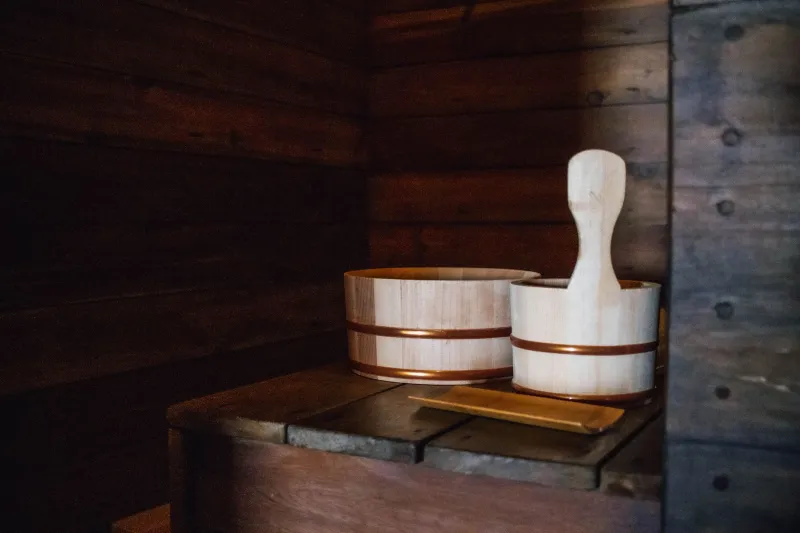
There's a moment — maybe thirty seconds into a cold lake plunge after a scorching sauna session — where your brain goes completely quiet. Not the quiet of distraction or fatigue, but something sharper. A kind of forced reset. In Finland, they've known about this moment for generations. The rest of us are just catching up.
Across the United States, a growing number of business leaders, entrepreneurs, and high-stakes decision-makers are turning to thermal contrast practices — the deliberate cycling between intense heat and cold immersion — not just for the physical benefits, but for what happens mentally on the other side. And when you look at the Finnish tradition that inspired it all, it starts to make a lot of sense.
What Thermal Contrast Actually Does to Your Brain
Let's skip the wellness-speak for a second and get practical. When you sit in a sauna at 180°F and then drop into cold water, your body triggers a cascade of physiological responses. Heart rate spikes, then slows. Cortisol — the stress hormone that tends to run the show when you're buried in a tough call — drops significantly after the cold phase. Norepinephrine, which supports focus and attention, surges.
But beyond the chemistry, there's something behavioral happening too. The practice demands that you get comfortable being uncomfortable. You choose to stay in the heat longer than feels easy. You choose to step into the cold even when every instinct says to skip it. That's not passive relaxation — that's active mental training.
For anyone who's ever stalled on a critical hire, frozen up before a difficult conversation with a board, or spent three weeks overthinking a product pivot, that kind of training has real-world value.
The Finnish Relationship With Discomfort
In Finland, the sauna isn't a luxury add-on. It's infrastructure. There are roughly 3 million saunas for a country of 5.5 million people. Families gather in them. Business deals get hashed out in them. New babies are welcomed into the world in them. The sauna is where Finns go to be honest — with each other and with themselves.
That honesty isn't coincidental. The physical vulnerability of sitting in extreme heat, stripped of the usual social armor, has a way of cutting through pretense. Add the cold plunge, and you've created a ritual that mirrors the very structure of hard decisions: discomfort, endurance, release, and clarity.
This is the essence of sisu — that untranslatable Finnish concept of grit, inner resolve, and the willingness to keep going when things get genuinely hard. Sisu isn't reckless stubbornness. It's the calm that comes from having faced difficulty before and knowing you can face it again. Thermal contrast, practiced consistently, builds exactly that kind of calm.
Why American Decision-Makers Are Paying Attention
Decision paralysis is a real problem in American business culture. We have more data, more options, and more opinions available to us than at any point in history — and somehow, that abundance often makes us worse at deciding, not better. We optimize for the illusion of certainty. We wait for one more report, one more market signal, one more opinion from someone we trust.
What thermal contrast practice offers isn't a shortcut. It's a recalibration. Entrepreneurs who've incorporated regular sauna and cold plunge routines into their weeks describe a consistent pattern: decisions that used to feel enormous start to feel more manageable. Not because the stakes are lower, but because their baseline anxiety is lower.
One founder based in Austin — who asked to remain anonymous but runs a mid-size logistics company — put it plainly: "I used to sit on decisions for days. Now I spend twenty minutes in the sauna, do a cold plunge, and by the time I'm dried off, I usually know exactly what I need to do. It's like the noise just... drains away."
That's not magic. That's physiology meeting practice.
Building Your Own Thermal Contrast Ritual
You don't need a lakeside cabin in Lapland to get started, though it certainly wouldn't hurt. Cold plunge tubs have become increasingly accessible, with options ranging from affordable ice bath setups to higher-end units designed for daily use. Many gyms and wellness studios across major US cities now offer sauna and cold plunge access, and the community around these practices has grown considerably over the past few years.
If you're new to it, the general framework is simple: heat up fully in a sauna (or steam room) for 10 to 20 minutes, then transition to cold immersion — a plunge pool, cold shower, or natural body of water — for one to three minutes. Repeat the cycle two or three times. Finish on cold.
The finishing-on-cold part matters more than most people realize. It's the part that requires the deliberate choice to do something hard when you could easily stop. That's the rep. That's the training.
Consistency matters more than duration. A twice-weekly practice done regularly will outperform a single marathon session every few months. Like most things worth doing, it's the habit that builds the resilience, not the one-time experience.
Clarity Isn't Comfortable — That's the Point
Here's the thing about Finnish sauna culture that gets lost when it's packaged as a wellness trend: it was never about luxury. It was about necessity. About preparing the mind and body to handle whatever comes next. About the understanding that you can't think clearly when you're wound tight, and that sometimes the fastest path to a good decision is the one that runs straight through discomfort.
The most decisive leaders — the ones who seem to move through hard choices with a kind of unhurried confidence — aren't people who've eliminated uncertainty. They're people who've made peace with it. They've sat with the heat long enough to know they can handle it. They've jumped into the cold enough times to know they'll come out the other side.
That's sisu. And it turns out, you can practice it one plunge at a time.