Ship It, Then Shape It: The Finnish Maker's Case Against Waiting for Perfect
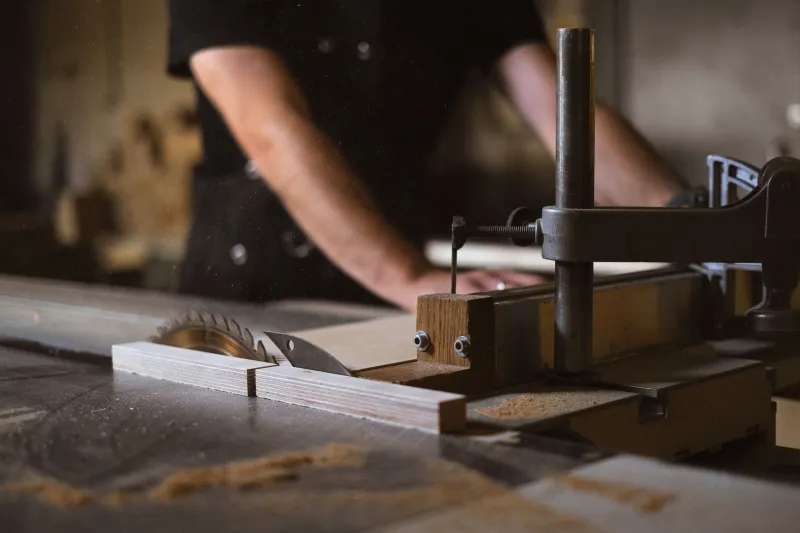
Somewhere in a workshop outside Tampere, a woodworker named Eero is sanding a cutting board for what he says will be the last time. Not because it's flawless — there's a small knot near one edge that refused to cooperate — but because the board does exactly what it's supposed to do. It'll hold a knife. It'll last decades. It's ready.
"I could sand it another hundred times," he says, holding it up to the light. "But then it's not a cutting board anymore. It's just something I'm afraid to let go of."
That sentence deserves to sit with you for a second.
Because if you've ever launched a product six months later than you planned, scrapped a project after pouring a year into it, or found yourself redesigning a logo for the fourteenth time — you already know what Eero is talking about. You've been there. Most American makers have.
The Perfectionism Trap Is a Real Business Problem
We tend to romanticize perfectionism in American culture. It shows up on job applications as a humble-brag weakness. It gets celebrated in startup mythology. "We didn't launch until it was right" sounds noble — until you realize the competitor who launched something rougher, six months earlier, now owns your market.
Research on creative paralysis consistently points to perfectionism as one of the leading causes of project abandonment. It's not laziness killing great ideas. It's the endless loop of not yet — the belief that one more revision, one more round of feedback, one more tweak will finally make the work worthy of being seen.
Finnish makers, by contrast, seem to operate with a different internal clock. Not a sloppy one. Not a careless one. A calibrated one.
What 'Done' Actually Means in Finnish Making Culture
Finland's relationship with craft is ancient and deeply practical. For generations, things were made to function in harsh conditions — tools, textiles, buildings. There was no room for endless iteration when the winter was coming and the axe handle needed to hold. "Good enough" wasn't a compromise. It was survival logic.
That pragmatism never fully left. It just evolved.
Anika, a Helsinki-based ceramic artist who now sells her work to buyers across the US, puts it plainly: "In Finland, we don't really have a word that means 'perfect.' We have words that mean 'ready' and 'useful.' Those are the goals."
She laughs when asked about American customers who sometimes message her asking if a piece was intentionally asymmetrical. "Yes," she says. "It was made by human hands. That is the intention."
This isn't about settling. Finnish standards for durability, material quality, and function are famously high. But the finish line is defined by purpose — not by some imaginary ideal that keeps moving every time you get close.
The Cost of Waiting (That Nobody Talks About)
Here's what perfectionism actually costs you, and it's rarely calculated honestly.
Time, obviously. But also momentum. The longer a project sits in revision, the more it absorbs your creative energy without producing anything. You're paying rent on an idea that isn't generating any return. Meanwhile, the market is moving, your potential customers are solving their problems with someone else's imperfect solution, and your confidence — quietly, invisibly — is eroding.
Jordan, a furniture maker based in Portland, Oregon, spent three years refining a modular shelving system before he finally launched it. "I thought I was being responsible," he says. "Turns out I was just scared. The version I launched was maybe 15% better than what I had two years earlier. Was that 15% worth two years? Absolutely not."
After spending time reading about Finnish design philosophy — specifically the concept of finding the essential function of an object and building only to that — Jordan says his whole process changed. "I stopped asking 'is it perfect?' and started asking 'does it do the thing?' If yes, it ships. Then I learn from real people using it in real life."
His sales tripled in the first year after that shift.
Sisu and the Courage to Call Something Done
There's a reason sisu — the Finnish concept of grit, resilience, and inner determination — is central to how we think about making here at Made With Sisu. Because it takes a particular kind of courage to release work into the world before you feel completely ready.
Perfectionism can masquerade as high standards. But often, underneath it, is fear. Fear of judgment. Fear of failure. Fear that if the work isn't perfect, you aren't enough.
Sisu pushes back against that. It says: you do the work, you do it well, and then you let it go out into the world where it can actually be useful. The resilience isn't in holding on. It's in releasing — and then doing it again, a little better each time.
Eero, back in his Tampere workshop, calls this "the honest loop." Make something. Let people use it. See what breaks or bothers them. Fix it in the next one. "A craftsperson who never ships anything never learns anything," he says. "The workshop teaches you. But only if you're willing to be wrong in front of people."
How to Start Shipping Sooner (Without Lowering Your Standards)
If you're a maker, founder, or creative professional ready to break the perfectionism cycle, here's what Finnish craft culture actually suggests — not as a shortcut, but as a reframe.
Define 'done' before you start. Before you begin a project, write down what 'done' looks like in functional terms. Not aesthetic terms. What does this need to do? When it does that reliably, it's ready.
Separate quality from completeness. High quality and total completeness are not the same thing. A handmade ceramic mug with a small glaze variation is high quality. A mug that holds liquid, feels good in the hand, and lasts for years is complete. Both can be true without the piece being "perfect."
Build your honest loop. Plan for iteration from the start. Version 1 isn't your final word — it's your opening statement. Let real users respond. Then make version 2 smarter.
Set a ship date and hold it sacred. Finnish makers often talk about respecting the material — knowing when it's told you everything it can. Respect your timeline the same way. When the date arrives, ship.
The Work Wants to Be Used
There's something almost philosophical in the way Finnish craftspeople talk about finished objects. A cutting board that never leaves the workshop isn't really a cutting board yet. A shelving unit that never holds anyone's books hasn't become what it was meant to be.
The work isn't complete until it's in someone's hands, doing its job.
That's the quiet revolution hiding inside Finnish making culture. It's not permission to be sloppy. It's permission to be done — and to trust that done, in the hands of real people, is where the real learning begins.
Ship it. Then shape it. That's the loop. That's the craft.